

Feral Farming
Returning the Land to a Time of Rich Habitats
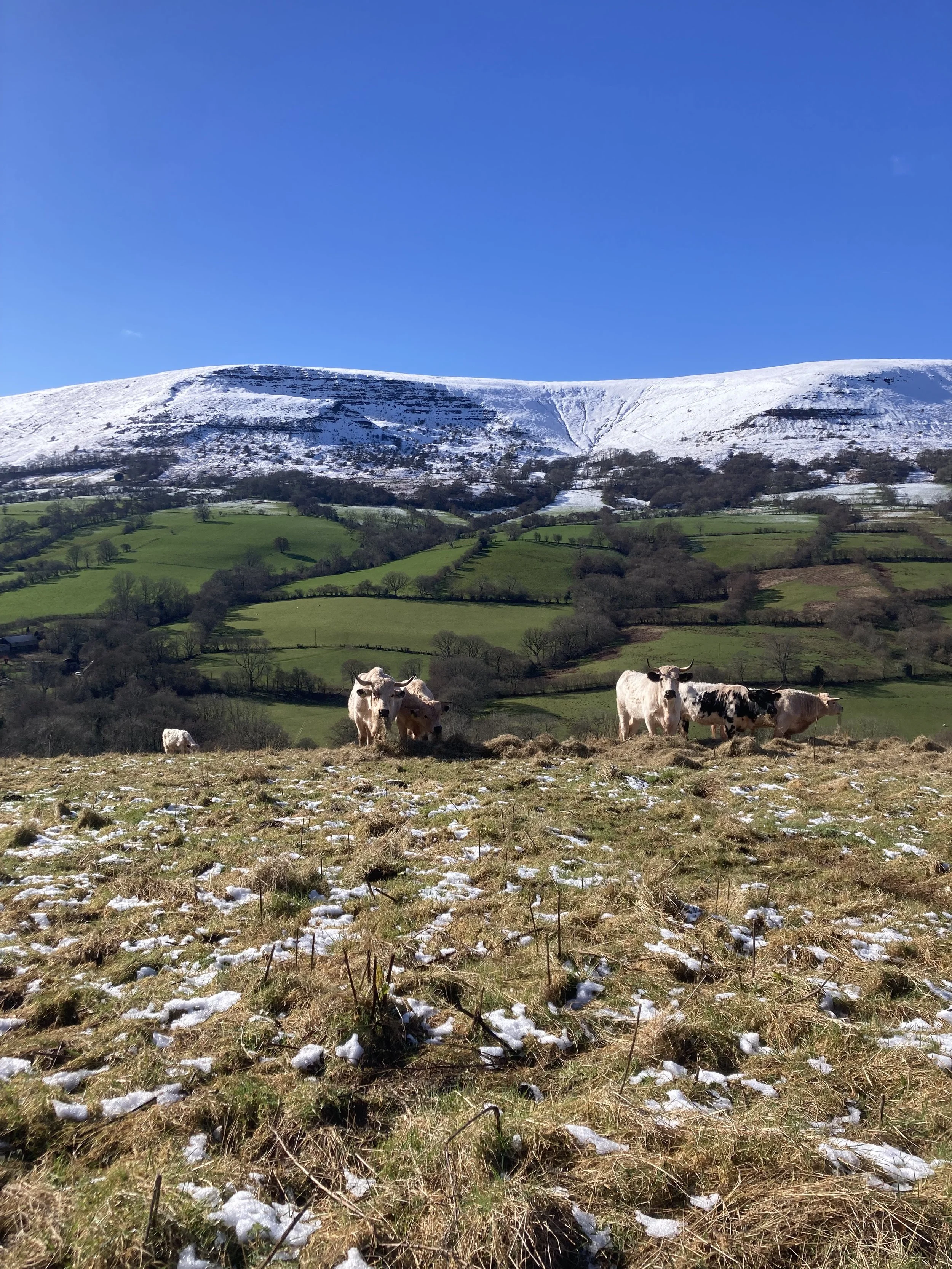
Nestled in the Black Mountains of Herefordshire, Chapel House Farm is home to the Feral Farming project — a visionary approach to agriculture that is returning the land to a time of rich habitats, teeming with wildlife and fertile soils. At Chapel House Farm, ancient breed animals work alongside nature to produce the nutritious heritage grains and pulses of our ancestors, and the results speak for themselves: grain that tastes extraordinary.
This is exactly why we partner with them. Chapel House Farm's vision for farming is as bold as the flavour of their grain, and together we have built a grain-to-product partnership that brings the very best of wild British agriculture straight to your table.
Ancient Breeds Shaping a Living Landscape
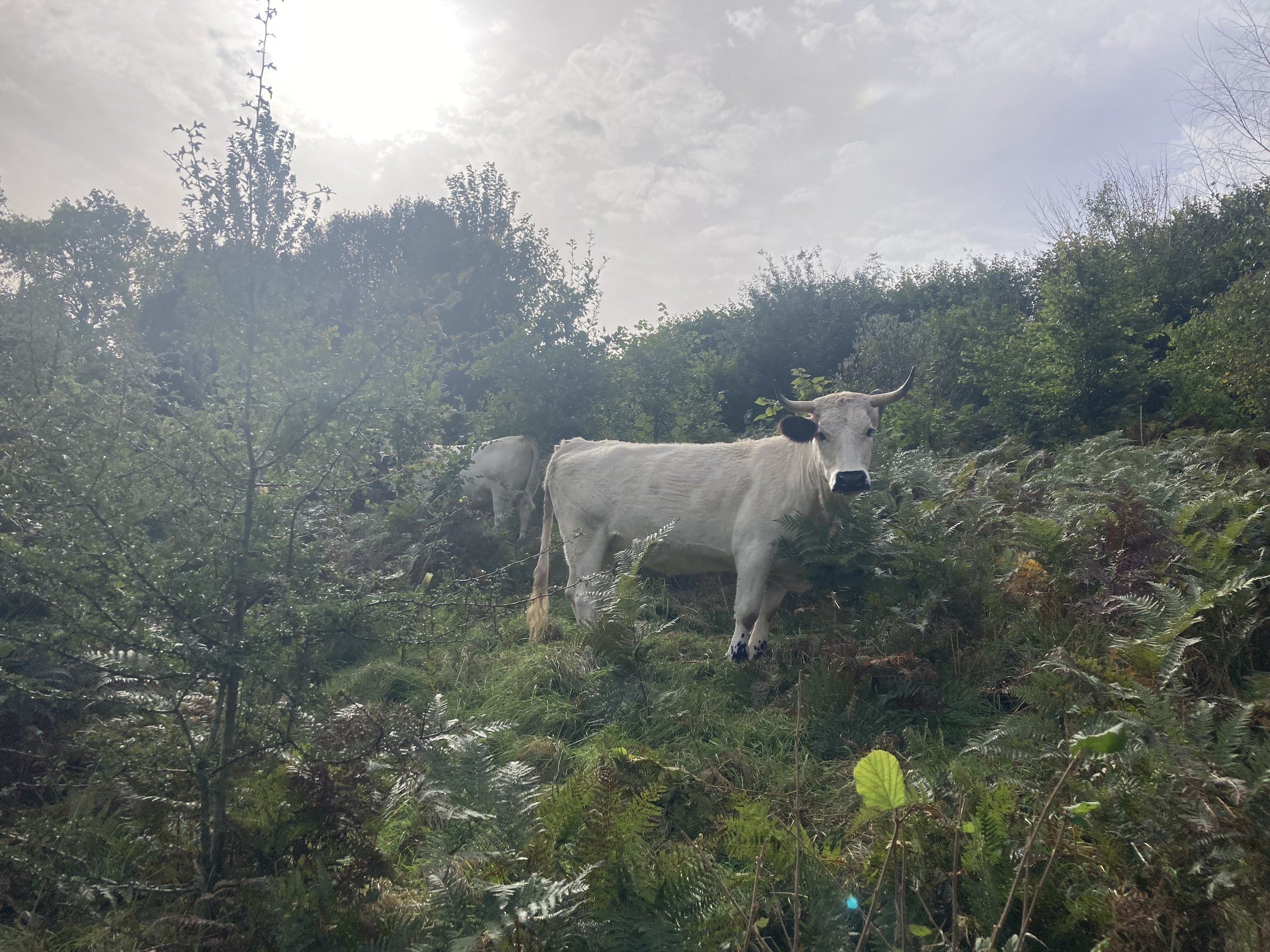
The farm's White Park cattle are one of Britain's most ancient breeds — the last wild cattle of our forests. They thrive purely on natural forage, browsing tree leaves and grazing wild grasses and herbs, never fed any concentrate cereal. Just one cow can support half its body weight in insect life in a single year through its dung alone, and their grazing encourages even more diverse plant growth to flourish across the farm.
Meanwhile, the farm's Iron Age pigs — an exciting cross of Wild Boar and the rare breed Large Black — are remarkable habitat creators. Rooting out bracken and scrub, they disturb the soil to allow long-buried seeds to sprout, attracting insects and birds. They also create natural scrapes that hold back rainwater and build new, diverse ecosystems. Fed on a natural diet of wild greenery, fallen crab apples, hazelnuts, acorns, and organic bran from the farm's own flour milling, they are never given soya or cereal concentrate.
Together, these animals are not just livestock — they are the architects of a thriving, rewilded landscape.
Organic Heritage Grains — The Partnerships Heart
Chapel House Farm grows a range of organic heritage wheats including Red Lammas, April Bearded, Hen Gymro, and Ergyng. These varieties are planted alongside a diverse range of pulses and herbs, creating a healthy ecosystem for the plants to grow in — no chemical intervention, no monoculture, just grain allowed to find its own strength in living soil.
The grains are then stone-milled, by us, into tasty, nutritious flour. They boast an older gluten protein, different to modern wheat varieties, that some customers find more digestible. The flavour is clean, complex, and unmistakably full of life — a direct reflection of the wild, biodiverse land they grow in.
It is this grain that forms the foundation of our partnership. We chose Chapel House Farm because their approach is visionary and, quite simply, their grain tastes exceptional.
Our Grain-to-Product Partnership
A Partnership Built on Shared Values
We believe that if you want a better environment, you have to pay the people who curate it. Most UK organic grain is traded at a fraction of its true worth, but we choose a different path. We pay Chapel House Farm's Feral Farming project what they ask, no negotiations, It pays for the restoration of the soil, the return of the dragonflies, and the long-term health of the land.
Simon and I speak regularly, ensuring that our partnership evolves alongside the landscape. We are not just customers; we are invested in the future of this soil. From their heritage wheat fields in the Black Mountains to our stone-milled flour, pasta, noodles, crackers, and biscuits, this is a true grain-to-product partnership — traceable, transparent, and rooted in respect for the land.