

Power……(part 1) what is it?
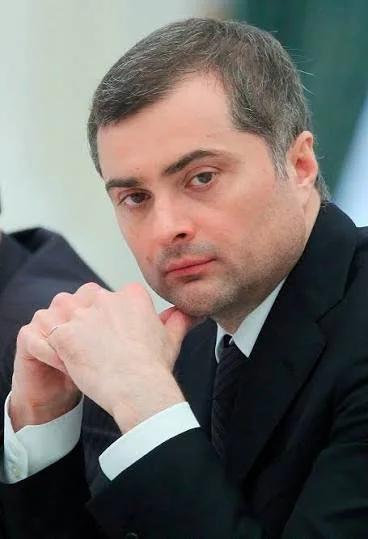
Vladislav Surkov
The Parallel System: Why We Must Own the Means of Nutrition and Power
The headlines in The Guardian yesterday (1/4/26) tell us that food inflation is a "war problem." We know better. It is a system problem.
When a government engages exclusively with large-scale retailers and energy giants, they aren't solving the crisis; they are subsidizing the status quo. These incumbents cannot be the solution because their survival depends on the very thing that is killing our resilience: the distance between the producer and the consumer.
We don't need a seat at their table. We need to build our own table.
1. The Incumbent Problem: A Conflict of Interest
We have to be honest: the large-scale chemical companies and industrial retailers are fundamentally misaligned with a healthy planet. Their model requires high-input, chemical-heavy farming and long, energy-intensive supply chains.
They view "efficiency" as the lowest possible price at the checkout, regardless of the cost to the soil or the farmer's soul. We see those incumbents not as partners, but as the wall we must climb over. Radical change doesn't come from asking a monopoly to be "nicer"; it comes from making that monopoly irrelevant.
2. Owning the Means of Production
To change the system, the people must own the tools. This is why The Fresh Flour Company focuses on the mill.
The Mill is the Engine: By owning the milling process, we take the power away from the industrial processors.
The Network of Makers: We don't want one giant factory in the Midlands. We want a thousand Fresh Flour mills in a thousand towns.
The Tools of Independence: When a community owns its own mill, its own bakery, and its own pasta-making equipment, it stops being a "target market" and starts being a sovereign entity.
3. The Local Web: From Soil to Deli
The radical change we envision is a vibrant, decentralized network. We see a direct line from the farmer’s gate to the deli counter, the farmers’ market, and the local farm shop.
No Middlemen: Every penny spent on a bag of our heritage pasta stays within this local loop—supporting the farmer who chose to plant Einkorn instead of commodity wheat and the maker who air-dries the noodles using local power.
Choice as a Radical Act: We give farmers the choice to grow for nutrition, not for the demands of a supermarket buyer’s spreadsheet.
4. Community-Owned Energy: The Final Piece
This system only works if we stop "renting" our lifeblood from energy corporations. We are an island of wind, sun, and tide. The "radical change" is the transition to a community-owned energy network.
Micro-Grids: Imagine a local mill powered by a community-owned wind turbine or a solar array on the roof of the village hall.
Energy Sovereignty: When the sun and wind power our pasta extruders and our stone mills, the price of our food is no longer tied to a war in a distant land. It is tied to the weather and our own collective labor.
The People’s Transition
This isn't a fight we win by lobbying a government that is tethered to corporate interests. We win by withdrawal. We withdraw our dependence on their energy, their chemicals, and their aisles.
We are building a network of makers, a circle of farmers, and a community of eaters who realize that the most radical thing you can do in 2026 is to feed yourself from a system you actually own.
The Fresh Flour Company Milling for the Revolution. Powering the Future. Connecting the Land.